



The right shed floor reduces callbacks, creates happy customers, and can be a protective barrier from the ground up.
A sturdy shed will need a sturdy floor as a protective barrier to stand up to the daily grind. Vital for a shed’s longevity, the shed floor must be ready for the abrasive conditions it will endure, while still being functional and appealing.
While some contend bare ground might be an initial option, a high-performance floor is what turns a shed into a long-term solution. A shed floor must provide a stable surface to walk on and be able store heavy equipment on, along with bulky and expensive items. Without the correct shed floor, moisture can seep in, leading to mold, warping, rot and other damage.
“We believe the shed floor is more than just the surface you walk on,” says Jen Stilwelll, associate segment marketing manager for LP Building Solutions, Nashville, Tennessee. “A strong, well-designed floor plays a critical role in the shed’s structural integrity, long-term durability, and how well it stands up to everyday use.
“A compromised floor can lead to injury from stepping or breaking through the overlay. But with the right materials, your shed stays solid and stable.”
START WITH THE FOUNDATION
Don’t skimp on a shed’s foundation. Without a firm, level foundation, shed floors will become unstable and unsafe. Start with a nice, solid, stable base, or things could start shifting.
Also, the right foundation will provide a well-draining base for a shed, which is one of the most effective ways to reduce the chances of the shed floor rotting.
Concrete makes for a solid and durable shed foundation, and another popular solution is gravel. Concrete is better for handling heavy loads due to its strength and durability. Gravel foundations provide better drainage, thus reducing the risk of water buildup around and under the shed.
Some suggest a foundation that’s a minimum of two inches off the ground. If any part of the floor is in ground contact, its timber will rot, provide easy access to rodents, and probably won’t stay straight because the earth has a habit of shifting and eroding after heavy rains.
The actual weight a shed floor can hold will depend on its foundation, the floor material used, and the shed’s construction. On average, a well-built shed floor can typically support several hundred to a thousand pounds. The average storage shed floor can hold 20 pounds per square foot.
Municipal authorities and homeowner’s associations may have restrictions on how foundations must be constructed and may even require an inspection after they’ve been laid and before the shed is added.
SHED FLOORING TYPES
How the shed will be used determines what type of flooring or foundation is best. Living spaces like mother-in-law suites or ADUs may prefer carpeting over plywood for comfort.
If you put a tractor in a shed not rated to hold its weight, the flooring may sag as the structural integrity weakens. High foot traffic areas may require more durable options.
Stilwell explains, “Whether it’s a garden shed or a heavy-duty workspace, usage directly impacts the kind of flooring you’ll need.
“For most shed applications, 16 inches on center is the standard for joint spacing. It provides a solid base for typical loads. If you’re planning to store heavier equipment or use the shed as a workshop, you might want to tighten that spacing to 12 inches on center and use a thicker overlay for added support.
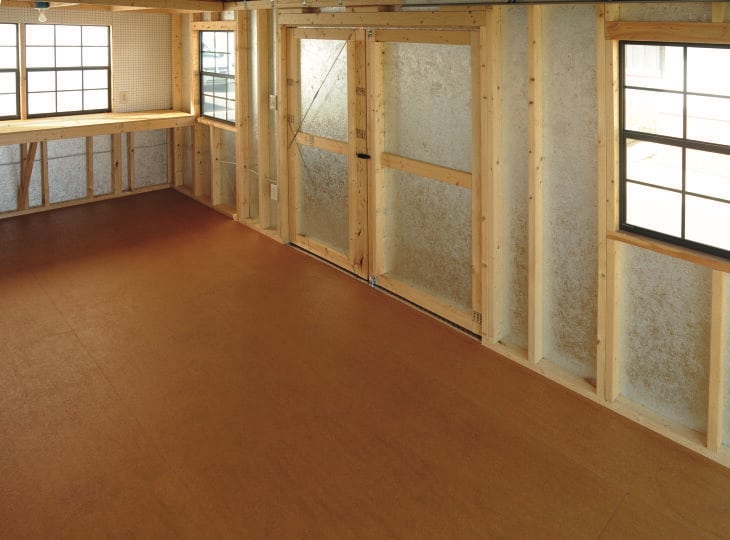
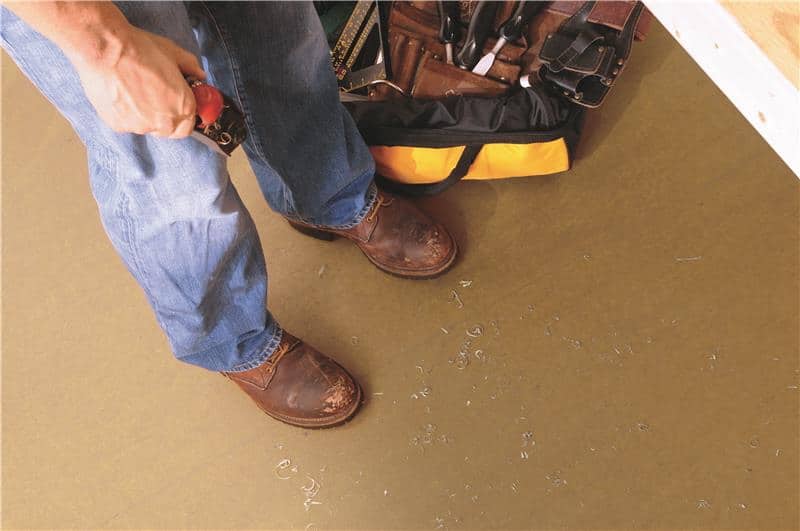
“Also, installing the flooring overlays with the smooth overlay side up gives you a clean, professional look and makes sweeping up sawdust or debris a whole lot easier.”
There are many options for shed floor materials all with varying degrees of effectiveness and attractiveness.
Concrete is the most durable and very low-maintenance flooring option, albeit being expensive, hard, and unwelcoming. If a shed has wooden joists and skids, concrete flooring can cause water to puddle around them, increasing the chance of rot and deterioration in the rest of the shed. The sturdiness and hardness of concrete can make it hard to stand on over a long period of time. It will also be challenging to remove if owners decide to relocate their shed. Concrete is very cold and uncomfortable during winter.
Pressure-treated plywood flooring is a durable and relatively inexpensive option for a shed. One of the main benefits of using pressure-treated wood for a shed floor is that the wood surfaces are sealed, preventing water from seeping into the wood and causing rot or decay. In addition, the wood is treated with a chemical preservative to protect it against insects and pests that can cause damage to the wood. However, it can still suffer from corrosion and weathering over time. It does not have a finished look. Too often, as untreated plywood dries it will shrink—causing the shed floor to have open gaps at the seams. Some plywood contains formaldehyde, which can release toxic fumes if not properly sealed.
OSB flooring is an inexpensive option, but it has weak water resistance. Consisting of leftover wood material, it has a lot of exposed end grain, which readily absorbs water. OSB will not be the best choice if shed owners want an inviting feel. It is possible to buy waterproof OSB flooring, but the edges of the boards must be treated.
Tongue-and-groove wood planks can be a great option for shed floors. They are an upgrade for plywood flooring and fit together like jigsaw puzzle pieces. Timbers are strong and more attractive than concrete. However, like plywood, they can rot and attract wood-destroying insects. Planks can also warp when exposed to water, and while a shed floor is protected from the elements, it isn’t waterproof. A door left carelessly open, wet equipment, and muddy shoes will expose a shed floor to water, resulting in rotting, staining, and warping. Planks can be damaged by heavy objects being dragged or rolled across them.
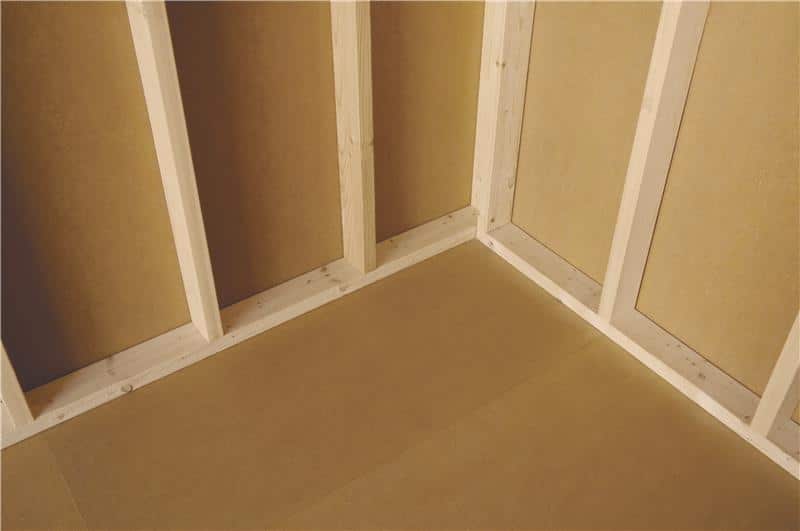
Eugene, Oregon-based Oregon Backyard Buildings’ tongue-and-groove engineered shed floor panels offer a more stable floor via their strength and stiffness. They are free of knots and patches with a thermally fused face.
Interlocking tiles are a versatile and user-friendly option that offers a different look than plywood or linoleum. Tiles are easy to install and simple to replace, and they can be mixed and matched to create a unique look for sheds. They simply snap together, and they can be placed on any surface. They’re also easy to maintain as they don’t absorb moisture and dirt. However, plastic tiles can crack in extreme cold.
Vinyl plank flooring is a simple floor covering option that can easily be installed on a shed’s subfloor. It cleans with soap and water, and trims to fit. It has become quite a popular flooring option—it’s water-resistant, durable and affordable. Able to withstand almost any weather, it doesn’t require adhesive to be installed. However, it is difficult to replace a small section if it gets damaged. It can be less eco-friendly than other options due to synthetic materials.
Rubber flooring is durable and perfect for workshops or gyms. This slip-resistant material provides exceptional traction, reducing the risk of accidents. Most often, it is set on top of concrete, OSB, or plywood flooring and needs a smooth, solid base beneath it. Protecting shed floors from scratches, stains, and scuffs, it can be secured to the floor with nails or a staple gun. Rubber can be bought in rolls or sheets and then rolled out. Rubber flooring has an anti-fatigue, cushioning effect, which is beneficial for prolonged periods of standing. However, rubber can retain odors.
Epoxy flooring offers a smooth, durable, and easy-to-clean surface. It works well for garages or studios, transforming sheds into a polished, resilient space. This protective coating provides an impressive shield against wear and tear and resistance to water and chemicals. It is usually available in several different colors for personalization. There are even slip-resistant epoxy finishes. It can be slippery when wet and may be challenging to apply.
Carpet, rugs, and runners add warmth and soundproofing, suitable for studios or living spaces. Typically, these products will be used as a floor covering but not as the floor itself. They are not moisture-resistant and can absorb water, stains, and odors, and can allow mold to grow. They are hard to clean and are not a good fit for storing mowers, ATVs, or other machinery that leak oil, gas, corrosives, or chemicals.
FACTORS TO CONSIDER
Overall, when deciding on the maze of shed flooring choices, consider the following factors:
Durability. Shed floors see a lot of pressure, and owners need a floor that can withstand the load. Also, the flooring may contain moisture, chemicals, and oil spillages. Some flooring will repel moisture and oil stains, while others will absorb the moisture and leave tough stains behind or may even warp.
Intended use. Determine how you plan to use the shed. If it’s for storage, a simple and cost-effective solution may suffice. For a workshop or office, you’ll want a more durable and comfortable flooring option.
Climate. Consider local climate and weather conditions. A shed in a rainy area may benefit from a concrete slab to prevent moisture issues.
Maintenance. Shed owners should select a flooring material that withstands the tests of time while keeping maintenance demands to a minimum. They should take advantage of the full potential of their shed without being tethered to tedious upkeep.
Budget. Budget will influence flooring choice. Some options, like gravel or patio blocks, are more budget-friendly than others. Each material costs differently, with shed flooring options often priced per square foot for easy comparison.
Personal preferences and appearance. Aesthetic preferences and design choices also play a role. A shed’s flooring is a blank canvas, waiting for its owner’s personal taste and style preferences to unfold. Owners should match colors and textures to create an atmosphere that they are happy with.